If you’ve ever ordered a T25 bulb to replace a burnt-out headlight, fog light, or even a decorative accent for a home appliance, you’ve probably stared at two small plastic pieces at the back of the bulb and wondered, “Does this fit what I already have?” As a long-time T25 bulb supplier, I get this question at least 10 times a week—and it’s not just from DIYers trying to avoid a misfit or a trip back to the auto parts store. The truth is, T25 bulbs aren’t one-size-fits-all, and pairing the right socket isn’t just about avoiding a hassle; it’s about preventing loose connections that can cause dim light, flickering, or even electrical damage down the line. T25 Bulb
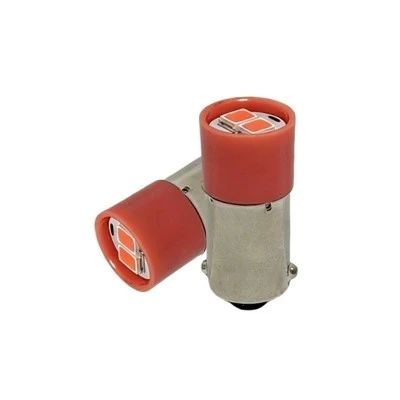
Let’s start with the basics, because not everyone knows what a T25 designation actually means. That “T” stands for “tubular,” and the “25” refers to its diameter in eighths of an inch—so a T25 bulb is 25/8 of an inch, or roughly 3.175 centimeters across. That standard size makes T25s popular across automotive, marine, and small domestic appliances, but the variation comes from the socket base that attaches it to the power source. Over the years, different industries developed their own sockets to suit their specific needs, so matching a T25 bulb to the right socket requires understanding those differences. Let’s break down the most common compatible sockets, and what makes each work (or not work) for T25 bulbs.
First on the list is the W2.1×9.5d socket, also called a wedge base socket. This is probably the most common socket for T25 bulbs, especially in automotive applications, and it’s the one I see used most often for our automotive-grade T25 line. The “W” here stands for wedge, which describes how the bulb locks into place: two small tabs on the base of the T25 bulb slide into matching slots inside the socket, and a slight twist (or in some cases, just pushing firmly until it clicks) holds it tight. The dimensions here are non-negotiable: the W2.1×9.5d refers to the width of the base (2.1 millimeters) and the distance between the center of the two contact points (9.5 millimeters). This socket is designed for low-voltage applications, usually 12 volts, which makes it perfect for car headlights, side markers, and interior dome lights. The key thing to note: not all wedge bases are the same. Some thinner T5 bulbs use a W1.5×4.6d socket, so never assume a wedge socket will work for a T25. For our T25 bulbs, every automotive-grade unit is pre-fitted with the W2.1×9.5d base to ensure a snug, corrosion-resistant fit in factory and aftermarket W2.1×9.5d sockets.
Next, we have the BA9s socket, also known as a bayonet base socket. Bayonet bases are familiar to anyone who’s swapped out a small appliance bulb—they use two small pins on the bulb base that slot into the socket’s notches, then twist 90 degrees to lock. The BA9s designation is short for “bayonet, 9mm diameter, single contact.” Wait, but BA9s is a single-contact base—how does that work with a T25? Good question. Most T25 bulbs have two contact points (for dual-function circuits, like a bulb that works as both a turn signal and a running light), but there are single-contact T25 variants designed specifically for BA9s sockets. These are most common in older marine applications, vintage motorcycles, and some small home lighting fixtures that use T25 bulbs for decorative accent lighting. The key distinction here is that BA9s sockets have a single central contact and a surrounding metal ring for the second circuit, so they’re not compatible with the dual-contact W2.1×9.5d T25s you’d use in a modern car. If you have an older boat with a T25 marker light, that’s almost certainly running on a BA9s socket, and you’ll need a single-contact T25 bulb to fit it. I always remind customers who source our marine-grade T25s to double-check their socket type here—mixing a dual-contact bulb into a BA9s socket won’t cause damage, but it’ll only turn on one function, which is frustrating if you’re replacing a dual-light marker.
Third, and often the most overlooked, is the SV8.5-8 socket, or the miniature screw terminal socket. You might also hear this called a “festoon socket,” though festoon usually refers to a specific type of linear bulb, so that’s a casual nickname. The SV designation stands for “slotted vertical,” and the 8.5 refers to the diameter of the screw terminals, 8 millimeters apart. Wait, a screw terminal for a T25 bulb? That’s for the single-ended T25 bulbs used in some refrigerator interior lights, oven stovetop indicator lights, and small display cases for retail stores. These bulbs don’t have the traditional wedge or bayonet base; instead, two small exposed screw terminals on the back of the bulb line up with the SV8.5-8 socket’s two screws, which you tighten to secure the connection. This is a low-voltage to medium-voltage socket, usually 12 to 24 volts, so it’s not used in automotive headlights (those are higher current, and the screw terminal can come loose from vibration). But for small domestic or commercial appliance T25s, this is a super common compatible socket. I’ve worked with a lot of appliance repair shops over the years, and one of the most frequent mistakes they make is ordering a wedge-base T25 for a refrigerator that uses an SV8.5-8 socket—they’ll show up with a bulb that doesn’t have the screw tabs, and it’s a wasted order. For our appliance-grade T25 bulbs, we label the base clearly so customers don’t make that mix-up.
Now, let’s talk about what sockets are not compatible, because I get a lot of questions about this too. For example, T10 or T15 bulbs, which are smaller than T25, use completely different sockets—T10s use W2.1×4.5d wedge bases, which are narrower than the W2.1×9.5d for T25s, so they’ll rattle around or not make contact if you force a T25 into a T10 socket. Similarly, the common E12 candelabra base socket, used for small decorative bulbs and nightlights, is way too narrow for a T25 bulb—you can physically push the T25 into an E12 socket, but it won’t make electrical contact, and forcing it can crack the glass. Another big one: automotive H7 or H11 headlight sockets. Those are designed for larger, higher-wattage bulbs, and their contact points are spaced differently than a W2.1×9.5d socket, so a T25 bulb will never fit right in an H7 socket, no matter how hard you twist or push.
Wait, but there’s one more category I should mention: universal adapter sockets. A lot of people ask if they can use an adapter to make their existing socket work with a T25 bulb, and the answer is usually yes—if you do it right, but with caveats. For example, there are wedge-to-bayonet adapters that let you fit a T25 wedge bulb into a BA9s socket, but only for low-current applications like marker lights, not high-wattage turn signals or headlights. The problem with adapters is that they can add resistance, which leads to overheating, and if the fit is loose, vibration can cause flickering or even a short circuit. I never recommend adapters for critical applications like headlights, but they can work for non-load-bearing lights like decorative accent fixtures if you use a high-quality, UL-listed adapter.
So, how do you confirm compatibility before ordering a T25 bulb? That’s the million-dollar question, and as a supplier, I always give customers three quick checks to avoid mistakes. First, measure the base of your existing bulb or socket. For wedge bases, measure the distance between the two contact points (that’s the 9.5mm for W2.1×9.5d). For bayonet bases, measure the diameter of the base (9mm for BA9s). For screw terminals, measure the distance between the two terminals (8.5mm for SV8.5-8). Second, check the voltage rating of your socket. Most automotive sockets are 12V, appliance sockets are 12-24V, and decorative fixtures might be 120V—never put a 12V T25 bulb into a 120V socket, it’ll burn out instantly. Third, count the contact points. If your bulb has two small metal tabs or points, it’s a dual-contact bulb for W2.1×9.5d; if it has one central contact and a ring, it’s a single-contact bulb for BA9s; if it has two screw terminals, it’s for SV8.5-8.
Over the years, I’ve seen the frustration of a customer who ordered the wrong bulb and waited a week just to return it, so that’s why I’m so transparent about socket compatibility. Our T25 bulb line is tested to fit exactly into the sockets we’ve outlined, and we include detailed base dimensions on every product page, plus a compatibility guide right on our website for anyone who’s unsure. We also stock replacement sockets for each T25 line, so if you’re upgrading your vehicle’s lights or repairing an appliance, you can get the socket and bulb in one order, no guesswork.
Whether you’re a DIYer replacing a fog light on your truck, a marine mechanic updating navigation lights on a boat, or a commercial electrician stocking parts for a retail display case, matching your T25 bulb to the right socket is key to getting reliable, long-lasting light. It’s not about forcing a fit—it’s about working with the standard design that’s been built for T25 bulbs across industries.

If you’re sourcing T25 bulbs for any application, or you’re not sure if your socket is compatible, feel free to reach out to our team to discuss your exact needs. We can help you confirm socket type, voltage requirements, and recommend the right T25 bulb for your project, no matter how big or small.
B22 Bulb References:
- SAE International. (2020). SAE J1112: Light Bulb Base Specifications for Automotive Applications.
- National Electrical Manufacturers Association (NEMA). (2018). Standard for Miniature Lamp Bases and Sockets.
- American Boat and Yacht Council (ABYC). (2021). Electrical Systems Standard: Small Boat Lighting Components.
- International Electrotechnical Commission (IEC). (2019). IEC 60061: Lamp Caps, Sockets, and Gauges for Light Sources.
BULBPLAN Co., Ltd.
As one of the most professional t25 bulb manufacturers and suppliers in China, our products have good reputation in the market. Please feel free to wholesale cheap t25 bulb for sale here and get pricelist from our factory. Quality products and reasonable price are available.
Address: No. 86 Zhongli Road, Nancheng Street, Dongguan City, Guangdong Province
E-mail: Alex@bulbplan.com
WebSite: https://www.nicebulbs.com/
