Hey everyone, Sarah here, and I’ve been on the hot rolling equipment supply grind for almost a decade now—so when shop foremen and mill managers ping me asking, “What’s the actual warranty period for hot rolling gear?” I get it, this stuff isn’t just a checkbox. I’ve seen way too many teams shoot in the dark, overpay for “gold-plated” warranties they’ll never use, or cut corners on coverage that comes back to bite them when a roll fails mid-shift. Let’s break this down like we’re hanging out by the control room, no stuffy industry jargon (okay, maybe a little, but I’ll translate it). Hot Rolling Equipment

First off, let’s get one thing straight: there’s no one-size-fits-all number here. I’ve sold everything from small modular rolling stands for mini-mills cranking out rebar to full integrated lines for big plate mills pushing 200-ton slabs, and their warranty periods? Night and day. But let’s start with the baseline that almost every reputable hot rolling equipment supplier sticks to, because that’s the stuff that actually holds up. For most standard, off-the-shelf hot rolling components—think backup rolls, work rolls, hydraulic manifolds, the basic PLC control modules—our standard warranty is 12 months from the date of commissioning, or 18 months from shipment, whichever comes first. Wait, why two numbers? Because some customers take forever to install gear that arrives, and I’m not gonna let a warehouse delay tank their coverage if they get it running at month 16. That’s a fine print trick I’ve seen bad suppliers pull, so we made a point of avoiding it.
But hold on—this is where things get juicy, because the “fine print” that actually matters isn’t the small text, it’s what’s covered. A lot of guys reach out saying, “Yeah, my last warranty was 12 months, and it covered nothing.” Ugh, I hear that all the time. Let’s clarify: our core warranty covers defects in material or workmanship, not wear and tear. Big difference. Work rolls, for example—those are the ones doing the heavy lifting, deforming the metal every pass. If a work roll cracks because we used a subpar alloy or messed up the heat treatment during manufacturing? That’s our call, no questions, we ship a replacement and cover labor if it’s part of a standard service call. But if you run that roll 24/7 with zero lubrication and it wears out in 3 months? Yeah, that’s on you, and I’ll be the first to tell you that. Hot rolling is brutal—temperatures are over 1000°C, tons of pressure, constant vibration—so we’re not gonna cover abuse, that’s just irresponsible for everyone.
Now, what if you need longer coverage? That’s where a lot of my regular customers come in. Let’s say you’re a mini-mill running rebar 18 hours a day, no downtime tolerance—your roll change is a 2-hour window, if it slips up, you lose thousands. We offer extended warranty packages, right now our most popular one is 24 months on all core mechanical and electrical components. How does that work? You sign a service agreement with our on-site techs—they come in every 3 months to do a full vibration analysis, check hydraulic fluid purity, calibrate the PLCs, all that proactive stuff. It’s not us just extending the warranty for cash; it’s us making sure the gear is maintained correctly so the risk of failure is way lower. I had a customer in Detroit who used to change work rolls every 45 days, after he signed up for our extended warranty and service checks, he’s at 60 days now and hasn’t had a roll failure in 18 months. Win-win for both of us, because it means less headaches for him and no surprise claims for us.
Wait, let’s talk about the wild cards here, because not all hot rolling gear is the same. If we’re talking about custom integrated lines—like the ones we built for a steel mill in Texas that does high-strength automotive plate—their warranty is different. Full line warranty is usually 18 months from start-up, because those are way more complex. There’s the reheating furnace, the descaling box, the roller tables, the crop shears, all synced up with a custom automation system. If the descaling box is misaligned from the get-go, that’s a huge production issue, so we don’t want to cut corners here. And for those custom jobs, we include a 3-month “break-in” period where our senior techs are on-site full-time, troubleshooting any kinks, and that’s all covered under the base price, no extra charge. I’ve had people ask me, “Why not just sell the line and dip?” Dude, if that Texas mill’s line fails, my rep is out there the next day—word travels fast in this industry, I can’t afford a bad rep, and neither can my team.
Another thing that trips people up: consumables vs. capital parts. Consumables—like grease filters, cutting blades, roller bearings that are designed to be swapped out every few months—don’t come with the same warranty as the big-ticket capital parts. That’s not a loophole, that’s just physics. A work roll is built to last months (if maintained) and a filter is built to last weeks. We do offer consumable warranties, but they’re usually 30 or 90 days, because those are wear items, not defects. If a filter fails after a week because of a bad batch of material? We’ll replace it, no problem. If you just forgot to change it and it clogged? That’s on you, simple as that.
Let me also touch on something I don’t see a lot of suppliers talk about: warranty for retrofits. A lot of older mills out there are retrofitting their hot rolling lines instead of buying new ones, to squeeze more life out of their existing gear. I get that—those old lines might have another 10 years in them if you update the controls or replace a worn roll stand. For retrofits, our warranty is 12 months on all new components we install, and we even match the warranty of the existing gear as long as it’s in good working order. A customer in Ohio did a retrofit last year, replacing the automation system and a pair of work rolls on their 20-year-old line—we gave them 12 months on the new stuff, and when their old roll stand had a minor issue at month 10, we helped them troubleshoot even though it wasn’t our gear. That’s the kind of stuff that keeps people coming back.
Now, let’s bust a myth I hear all the time: “A longer warranty means a better product.” Nah, not always. I’ve seen a couple of cheap suppliers offer 3-year warranties on junk gear, because they know it’ll fail right when the warranty runs out, so they don’t care. Our base 12-month warranty is actually more reliable than some 2-year ones out there, because we build our gear to last. I’ve had a work roll we made in 2015 that’s still running at a small mill in Indiana, and it’s only needed one replacement because of a material defect (that was a heat treatment mistake from our early days, we fixed that process immediately). So yeah, don’t chase the longest number—ask what’s covered, what’s excluded, and if the supplier has a track record of honoring claims.
If you’re wondering what happens if something does go wrong, here’s the real tea. Our support team is on call 24/7, 365 days a year. A work roll cracks at 2 a.m. on a Sunday? We’ll ship a replacement via overnight freight, no hoops to jump through. And if it’s a defect, we cover all the freight, no deductibles, no fine print. I’ve had a foreman call me at 1 a.m. last winter, his PLC module died and he was losing $10k an hour. We sent a tech on a flight at 5 a.m., had the module replaced by 1 p.m., and got his line back up. That’s the kind of stuff that makes a difference, and that’s part of what backs our warranty.
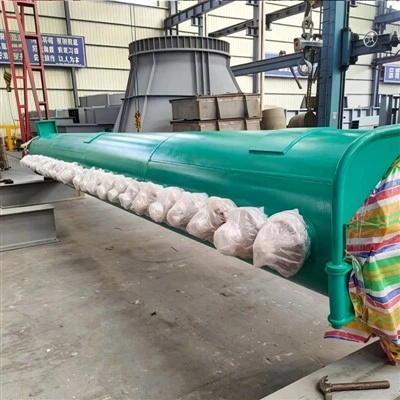
Okay, let’s wrap this up. If you’re shopping for hot rolling equipment, the warranty period isn’t just a number on a spec sheet. It’s tied to what the supplier builds, how they support you, and what they actually stand behind. Our standard for most gear is 12 months from commissioning / 18 months from shipment, with extended warranty options for folks who want extra peace of mind or proactive service. For custom lines, it’s 18 months, retrofits are 12 months on new components. But at the end of the day, the best warranty is one that works when you need it, not just when it’s convenient for the supplier.
Petrochemical Equipment If you’re ready to chat about your specific needs—whether it’s a small rebar line, a big plate mill, a retrofit for your old gear—hit our team up. We can walk through your production schedule, your downtime tolerance, and figure out exactly what warranty makes sense for you, no pressure, no sales pitches, just straight talk.
References
- American Iron and Steel Institute. (2022). Best Practices for Hot Rolling Mill Equipment Lifecycle Management.
- Machinery Lubrication Magazine. (2021). Warranty Terms and Conditions for Industrial Metalworking Equipment.
- National Association of Metal Formers. (2023). Service and Warranty Standards for Hot Rolling Mill Components.
Jiangsu Dongfang Whole-Set Equipment Manufacturing Group Co., Ltd.
We are one of the most professional hot rolling equipment manufacturers and suppliers in China, also support customized service. With abundant experience, we warmly welcome you to buy durable hot rolling equipment from our factory. If you have any enquiry about pricelist, please feel free to email us.
Address: No. 9, Industrial Park, Xinqiao Town, Jingjiang City, Jiangsu Province
E-mail: dfctwm@163.com
WebSite: https://www.dongfangequip.com/
