How to control the movement of a hydraulic actuator?
As a supplier of hydraulic actuators, I’ve witnessed firsthand the transformative impact these powerful devices have on diverse industries. From manufacturing and construction to aerospace and automotive, hydraulic actuators are the unsung heroes behind the seamless operation of countless machines and systems. In this blog post, I’ll share insights into the key factors and techniques involved in controlling the movement of a hydraulic actuator, empowering you to optimize performance and achieve your desired outcomes. Hydraulic Actuator
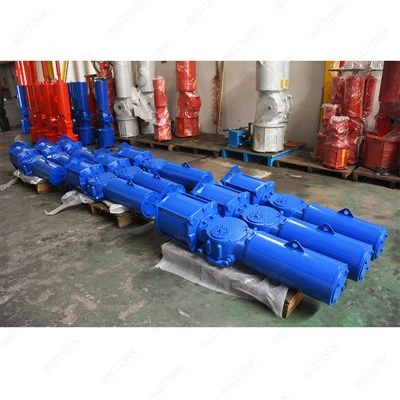
Understanding Hydraulic Actuators
Before diving into control mechanisms, let’s briefly review the basics of hydraulic actuators. These devices convert hydraulic energy into mechanical motion, typically in the form of linear or rotary movement. They consist of a cylinder, piston, and hydraulic fluid, which work together to generate force and movement. When hydraulic pressure is applied to one side of the piston, it moves in the opposite direction, creating linear motion. Rotary actuators, on the other hand, use hydraulic pressure to rotate a shaft or other component.
Key Factors in Controlling Hydraulic Actuators
Controlling the movement of a hydraulic actuator involves several key factors, each of which plays a crucial role in achieving precise and efficient operation. Here are some of the most important factors to consider:
- Hydraulic Pressure: The pressure of the hydraulic fluid is the primary driving force behind the movement of the actuator. By controlling the pressure, you can regulate the force and speed of the actuator’s movement. This is typically achieved using a hydraulic pump, which generates the pressure, and a pressure control valve, which regulates the flow of fluid to the actuator.
- Flow Rate: The flow rate of the hydraulic fluid determines the speed at which the actuator moves. By adjusting the flow rate, you can control the acceleration and deceleration of the actuator, as well as its overall speed. This is typically achieved using a flow control valve, which regulates the amount of fluid flowing to the actuator.
- Directional Control: The direction of the actuator’s movement is determined by the direction of the hydraulic fluid flow. By controlling the direction of the fluid flow, you can reverse the direction of the actuator’s movement or switch between different modes of operation. This is typically achieved using a directional control valve, which redirects the flow of fluid to the appropriate ports on the actuator.
- Load and Resistance: The load and resistance acting on the actuator can significantly affect its movement. When the load is heavy or the resistance is high, the actuator may require more force and pressure to move. By understanding the load and resistance characteristics of your application, you can select the appropriate actuator and control system to ensure optimal performance.
- Feedback and Sensors: Feedback and sensors are essential for controlling the movement of a hydraulic actuator with precision. By measuring the position, velocity, and force of the actuator, you can adjust the control parameters in real-time to ensure accurate and consistent operation. This is typically achieved using sensors such as position sensors, pressure sensors, and force sensors, which provide feedback to the control system.
Techniques for Controlling Hydraulic Actuators
There are several techniques and strategies you can use to control the movement of a hydraulic actuator effectively. Here are some of the most common techniques:
- Open-Loop Control: Open-loop control is the simplest and most basic method of controlling a hydraulic actuator. In an open-loop system, the control signal is sent to the actuator without any feedback or adjustment based on the actual movement of the actuator. This method is suitable for applications where the load and resistance are relatively constant and the required accuracy is not very high.
- Closed-Loop Control: Closed-loop control is a more advanced method of controlling a hydraulic actuator that uses feedback from sensors to adjust the control signal in real-time. In a closed-loop system, the control system compares the actual movement of the actuator to the desired movement and makes adjustments to the control signal to minimize the error. This method is suitable for applications where the load and resistance are variable and the required accuracy is high.
- Proportional Control: Proportional control is a type of closed-loop control that uses a proportional valve to regulate the flow of hydraulic fluid to the actuator. In a proportional control system, the control signal is proportional to the desired movement of the actuator, and the proportional valve adjusts the flow of fluid accordingly. This method provides precise control of the actuator’s movement and is suitable for applications where fine adjustments are required.
- Servo Control: Servo control is a more advanced type of closed-loop control that uses a servo valve to regulate the flow of hydraulic fluid to the actuator. In a servo control system, the control signal is compared to the actual movement of the actuator using a feedback sensor, and the servo valve adjusts the flow of fluid to minimize the error. This method provides extremely precise control of the actuator’s movement and is suitable for applications where high accuracy and fast response are required.
Choosing the Right Control System
Choosing the right control system for your hydraulic actuator is essential for achieving optimal performance and efficiency. When selecting a control system, consider the following factors:
- Application Requirements: The specific requirements of your application, such as the required force, speed, accuracy, and load characteristics, will determine the type of control system you need. For example, if you need precise control of the actuator’s movement, a closed-loop control system with proportional or servo control may be required.
- Budget: The cost of the control system is an important consideration, especially for large-scale applications. Open-loop control systems are typically less expensive than closed-loop control systems, but they may not provide the same level of accuracy and performance.
- Complexity: The complexity of the control system will depend on the level of control required and the sophistication of the application. Simple applications may only require a basic open-loop control system, while more complex applications may require a closed-loop control system with advanced features such as feedback sensors and servo control.
- Reliability and Maintenance: The reliability and maintenance requirements of the control system are important factors to consider, especially for applications where downtime is not acceptable. Choose a control system that is reliable and easy to maintain, with a proven track record of performance in similar applications.
Conclusion

Controlling the movement of a hydraulic actuator is a complex but rewarding task that requires a thorough understanding of the key factors and techniques involved. By considering the factors discussed in this blog post and choosing the right control system for your application, you can optimize the performance and efficiency of your hydraulic actuator and achieve your desired outcomes.
Hydraulic Actuator If you’re interested in learning more about hydraulic actuators or need help selecting the right control system for your application, please don’t hesitate to contact us. Our team of experts is here to provide you with the information and support you need to make informed decisions and achieve your goals.
References
- Fluid Power Handbook, edited by the International Fluid Power Society
- Hydraulic Control Systems, by George R. Bishop
- Principles of Hydraulic Engineering, by Joseph E. Franzini and Wilbur H. Finnemore
- Introduction to Fluid Mechanics, by Robert W. Fox and Alan T. McDonald
Zhejiang Bigtork Valve Automation Co., Ltd.
Zhejiang Bigtork Valve Automation Co., Ltd. is one of the leading hydraulic actuator manufacturers and suppliers in China. We warmly welcome you to buy customized hydraulic actuator at competitive price from our factory. Contact us for more details.
Address: 98 Yuanqu Avenue,Anfeng Industrial Zone,Oubei,Yongjia,Zhejiang,China.
E-mail: sales@bigtork.com
WebSite: https://www.bigtork.com/
