If you’ve ever stood next to a control cabinet running non-stop in a factory, you know that low hum and subtle warmth aren’t just background noise—they’re the cabinet’s lifeblood working to keep machinery, sensors, and circuit boards running. As a control cabinet supplier who’s fielded hundreds of panicked calls about overheating units, I can tell you this: choosing one with proper, high-efficiency heat dissipation isn’t a luxury. It’s the difference between a machine that runs for 10 years and one that conks out in 2. Last quarter alone, I sat with a plant manager whose entire assembly line shut down for three days because his cheap, ill-equipped cabinet overheated and fried his motor drives. The replacement cabinet we installed that week? It’s already been running 24/7 without a single heat-related hiccup. Today, I’m breaking down how to pick a control cabinet where heat isn’t a problem—it’s a solved issue. Control Cabinet

First, let’s talk about why heat is the silent killer here. Every component inside a control cabinet—from microchips to power supplies to contactors—generates waste heat when it works. The general rule of thumb in industrial electronics is that every 18°F (10°C) rise above the recommended operating temperature cuts component lifespan by half. That’s a big number. A $100 overheat fix now saves you $10,000 in replacement parts and downtime later. The mistake most people make is picking a cabinet based on size and price first, then cramming in components, only to realize there’s no way for heat to escape. I see this all the time: someone buys a compact cabinet to save floor space, then loads it with extra relays and a high-power VFD (variable frequency drive) that cranks out twice as much heat as the cabinet was designed to handle. So step one isn’t about looking at cabinets—it’s about calculating exactly how much heat your setup will generate.
Let me walk you through how I do this for customers. Grab a pen (or a spreadsheet, trust me, this is way easier that way) and list every component that goes inside your cabinet, then look up its maximum heat output. Most manufacturers list this in the technical specs, usually in watts. For example, a standard 5HP VFD puts out roughly 150 watts of heat; a PLC (programmable logic controller) might be 50 watts; a string of circuit breakers could add another 100 watts. Add all those numbers together, then add a 20% buffer—because components don’t always run at peak efficiency 100% of the time, and you might expand your setup later. So if your total is 300 watts, you need a cabinet that can dissipate at least 360 watts of heat. Skip the old rule of “match the cabinet size to your components”—it’s garbage. I once had a customer whose 500-watt component load fit perfectly in a 600-watt heat-dissipation cabinet, but he tried to save money with a 400-watt unit. Six months later, he was calling us for an upgrade.
Now that you know your heat load, let’s talk about the different heat dissipation methods, because not all are created equal. The two main categories are passive and active cooling, and which one you pick depends on your application.
Passive cooling is the no-moving-parts option. It uses heat sinks, ventilation grilles, and the natural flow of air (convection) to move heat out. The big upside here is reliability—no fans to burn out, no filters to clean, no power draw. This works great for low-heat applications, like small PLC cabinets with only a few sensors and a small power supply. The key to good passive cooling is surface area. The more metal the cabinet has, the more it can radiate heat. Thicker steel or aluminum cabinets are better here because they conduct heat away from the internal components faster. Also, look for cabinets with internal heat sinks mounted directly on high-heat components, like VFDs. But passive cooling has a hard limit: it can only handle so much heat. If your heat load is over 300 watts, passive cooling will struggle, especially in hot environments (like a factory that runs at 95°F year-round). I had a food processing customer try passive cooling for their new packaging line, which put out 400 watts. By mid-summer, their cabinet was running 110°F inside—way too hot. We swapped in an active system, and problem solved.
Active cooling is the go-to for medium and high heat loads, and it’s where you have to pay attention to efficiency. There are two main active types: fan-assisted cooling and air conditioning (AC) units built into the cabinet. Fan-assisted cooling is common for 300 to 1,000-watt loads. It uses one or more fans to pull cool air in from the outside and push hot air out. But not all fan setups are the same. Cheap cabinets use a single low-quality fan that burns out every 12 months. Good cabinets use redundant fans—so if one fails, the other kicks in, and you get a warning alert before anything goes wrong. Also, look for fans with variable speed controls. In moderate temperatures, the fans run slow, saving energy; when it’s hot, they speed up to move more air. That’s a huge efficiency win over constant-speed fans that run at full blast 24/7. The other big mistake people make with fan-assisted cooling is poor air flow design. If the inlets and outlets are in the same part of the cabinet, you’re just recirculating hot air, not replacing it. Look for cabinets that put inlets on the bottom (pulling cool air from lower, possibly cooler parts of the room) and outlets on the top (letting hot air rise and escape). Some even have a baffle system that creates a direct path from the intake side of the cabinet to the exhaust side, so no air gets trapped in the middle where the components are.
For heat loads over 1,000 watts, or for environments that are extra hot, dusty, or humid, you need a cabinet air conditioning unit. These work like mini split systems: they cool the internal air and cycle it, keeping the cabinet temperature consistent no matter what’s outside. The key here is SEER (Seasonal Energy Efficiency Ratio) rating for the cabinet AC. A higher SEER unit uses less electricity, which adds up over the life of the cabinet. I recommend SEER 14 or higher for industrial use—they cost a little more upfront, but the energy savings pay for themselves in two years. Also, pay attention to the AC unit’s cooling capacity, not just the cabinet size. Some suppliers sell cabinets with undersized AC units to cut costs. For example, a cabinet rated for 1,500 watts of heat might have a 1,200-watt AC unit. That’s a recipe for disaster. Always match the AC’s cooling capacity to your total calculated heat load, plus that 20% buffer I mentioned earlier.
Now, let’s talk about the hidden factors that most people overlook when choosing a heat-efficient cabinet. First, ingress protection (IP) rating. Dirt, dust, and moisture are enemies of heat dissipation because they clog up filters, block vents, and insulate the cabinet, making it harder for heat to escape. If your cabinet is going in a dusty sawmill or a humid food processing plant, you need a cabinet with a high IP rating—at least IP54, which means it’s protected against dust and splashing water. IP65 is even better for really harsh environments, like outside applications or chemical plants. The catch here is that high IP ratings sometimes mean smaller vents to keep out contaminants, so you have to balance IP with cooling capacity. Look for cabinets with vented filters that are easy to clean or replace—this is a small detail that saves you hours of maintenance down the line. I always keep a spare set of filters for every cabinet I sell, because a clogged filter is the number one cause of overheating in fan-assisted systems.
Another hidden factor is the cabinet’s material and coating. Most control cabinets are made of steel, but some are aluminum. Aluminum conducts heat much better than steel—about three times more, in fact. That means an aluminum cabinet will radiate and dissipate heat faster than a steel one of the same size. The downside is aluminum is more expensive, but for high-heat applications, it’s worth the extra cost. Also, pay attention to the cabinet’s finish. A matte, dark-colored finish absorbs and radiates heat better than a shiny, light-colored one—contrary to what you might think, white paint doesn’t keep a cabinet cooler inside, because it just reflects heat away from the outside, not from the inside. Wait, no—let me correct that. For cabinets that are passively cooled, a dark finish helps with radiation, but for actively cooled cabinets, the finish matters less because the fans or AC are moving heat away. The real thing to avoid is a powder coating that’s too thick or non-conductive. Some cheap coatings insulate the cabinet, trapping heat inside, so the components have to work harder. I only use cabinets with thin, thermally conductive powder coatings that don’t slow down heat transfer.
Location matters too, even if you pick the most heat-efficient cabinet on the market. Where you install the cabinet will make a huge difference in how well it dissipates heat. Don’t put it in a corner against a wall, or on a floor where hot air from the ground can pool around it. Leave at least 12 inches of space on all sides of the cabinet for air flow—more if it’s in a hot room. If you have to put it in a tight spot, consider a cabinet with side vents or a fan that blows air out the back instead of just the top. Also, avoid installing cabinets near heat sources like furnaces, boilers, or other machinery that puts off extra heat. I once had a customer who put his cabinet right next to a welding station—surprise, surprise, it overheated every time they ran a long weld. We moved it 10 feet away, and the heat issue went away completely.
Let’s talk about a common misconception: more fans or a bigger AC isn’t always better. I’ve seen customers buy cabinets with three fans for a 200-watt heat load, and it’s just wasting energy and adding unnecessary noise. The sweet spot is matching the cooling capacity exactly to your heat load, with a small buffer. Over-cooling isn’t helpful, and it costs you more in electricity and upfront costs. That’s why calculating your heat load first is non-negotiable—you don’t want to overbuy, but you definitely don’t want to underbuy.
So, putting this all together, here’s my step-by-step checklist for choosing a high-heat-dissipation control cabinet:
- Calculate your total heat load: List all components, get their wattage, add 20% buffer.
- Match the cooling method to your load: Passive for under 300W, fan-assisted for 300-1000W, cabinet AC for over 1000W.
- Prioritize redundant fans or backup AC for high-reliability applications.
- Check IP rating and filter access: Make sure it’s rated for your environment, and filters are easy to maintain.
- Choose the right material: Aluminum for high-heat, steel is fine for low-heat or budget applications.
- Confirm proper air flow design: Intakes at the bottom, outlets at the top, baffles to direct air.
- Plan installation space: Leave 12 inches of clearance on all sides, away from other heat sources.
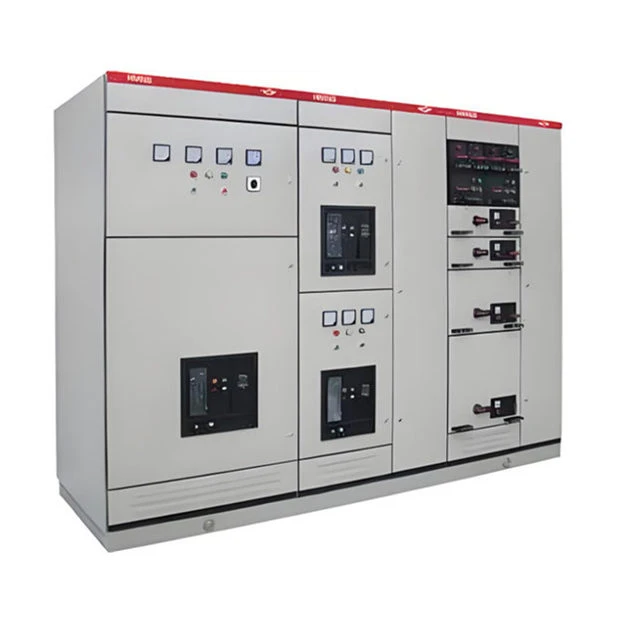
At the end of the day, a control cabinet’s job is to protect your critical electronics, and overheating is the number one cause of premature failure. I’ve been supplying control cabinets for 12 years, and I’ve seen every mistake in the book—from undersized AC units to clogged filters to bad air flow design. The best part of my job is when a customer calls a year later to say their cabinet is still running perfectly, no downtime, no surprises. If you’re in the market for a new control cabinet, or you’re dealing with an overheating unit that’s costing you money, I’m here to help. We can walk through your specific application, calculate your exact heat load, and recommend a cabinet that will keep your equipment running cool for years to come. Don’t let heat be the hidden problem that derails your operations—reach out to chat through your needs, no pressure, just real advice from someone who’s been in the thick of industrial settings for decades.
Low-voltage Switchgear References
- Control Cabinet Thermal Management Best Practices. Manufacturing Extension Partnership, National Institute of Standards and Technology.
- Industrial Electronic Component Lifespan and Temperature Correlation. Electronics Industry Alliance Technical Report.
- IP Ratings: Ingress Protection for Industrial Equipment. International Electrotechnical Commission Standard 60529.
- Fan and Air Cooling Efficiency for Enclosures. Association of Equipment Manufacturers Technical Bulletin.
Guangdong Baihao Electric Co., Ltd.
As one of the most professional control cabinet manufacturers and suppliers in China, we also support customized service. Please feel free to wholesale discount control cabinet in stock here from our factory. Quality products and low price are available.
Address: 201, 2nd Floor, Building 3, No.1, Honggang Section, Lihe Road, Lishui Town, Nanhai District, Foshan City
E-mail: jiang_baisi@126.com
WebSite: https://www.gd-baihao888.com/
