As a supplier of centerless grinding machines, I have a deep understanding of these remarkable pieces of equipment. Centerless grinding machines are widely recognized for their efficiency, precision, and ability to handle high – volume production. However, like any technology, they come with their own set of disadvantages. In this blog, I will delve into the drawbacks of centerless grinding machines to provide a comprehensive view for potential customers. Centerless Grinding Machine

1. High Initial Investment
One of the most significant disadvantages of centerless grinding machines is the high initial investment required. These machines are complex and sophisticated pieces of equipment, equipped with advanced control systems, high – precision grinding wheels, and other components. The cost of purchasing a centerless grinding machine can be quite substantial, especially for small and medium – sized enterprises.
For example, a high – quality centerless grinding machine with advanced features such as automatic feed systems, CNC controls, and high – speed grinding capabilities can cost anywhere from tens of thousands to hundreds of thousands of dollars. This significant upfront cost can be a major barrier for businesses with limited capital, preventing them from investing in this technology.
In addition to the purchase price, there are also other associated costs. Installation of the machine requires specialized knowledge and skills, and it may involve additional expenses for site preparation, electrical wiring, and coolant systems. Training of operators is also necessary to ensure the safe and efficient operation of the machine, which adds to the overall cost.
2. Limited Workpiece Geometry
Centerless grinding machines are designed to work on cylindrical workpieces. While they are extremely effective at grinding round parts, they have limitations when it comes to non – cylindrical geometries. For instance, if a workpiece has a complex shape, such as a square or hexagonal cross – section, a centerless grinding machine may not be the most suitable option.
The nature of centerless grinding relies on the rotation of the workpiece between the grinding wheel and the regulating wheel. This mechanism is optimized for round workpieces, and it becomes difficult to achieve accurate grinding on non – round parts. The lack of flexibility in handling different workpiece geometries can be a drawback for manufacturers who produce a wide variety of parts with diverse shapes.
Even for cylindrical workpieces, there are limitations in terms of length – to – diameter ratios. If the workpiece is too long relative to its diameter, it may be prone to deflection during the grinding process, leading to inaccuracies in the finished product. This restricts the range of cylindrical workpieces that can be effectively ground using a centerless grinding machine.
3. Difficult Setup and Adjustment
Setting up and adjusting a centerless grinding machine can be a complex and time – consuming process. Achieving the desired grinding accuracy requires precise adjustment of various parameters, such as the position of the grinding wheel, the regulating wheel, and the workpiece support. These adjustments need to be made with high precision to ensure that the workpiece is ground to the correct dimensions and surface finish.
For example, the angle and speed of the regulating wheel need to be carefully adjusted to control the feed rate and rotation speed of the workpiece. Any slight error in these adjustments can result in poor grinding quality, such as out – of – roundness or surface roughness. Moreover, when changing the workpiece size or type, the machine needs to be re – set up, which can take a significant amount of time and labor.
The complexity of setup and adjustment also requires highly skilled operators. Training operators to perform these tasks effectively can be a challenge, and there is a risk of human error during the setup process. This can lead to production delays and increased costs due to rework or scrap.
4. High Maintenance Requirements
Centerless grinding machines have high maintenance requirements. The grinding wheels need to be regularly dressed to maintain their cutting ability and shape. Dressing involves removing the dulled abrasive particles from the wheel surface to expose fresh cutting edges. This process needs to be carried out at regular intervals, depending on the grinding conditions and the type of workpiece.
In addition to wheel dressing, other components of the machine, such as the bearings, belts, and coolant systems, also require regular maintenance. Bearings need to be lubricated and inspected for wear, and belts need to be tensioned properly to ensure smooth operation. The coolant system needs to be cleaned and replenished to prevent the build – up of debris and ensure effective cooling during the grinding process.
Failure to perform regular maintenance can lead to a variety of problems, such as reduced grinding accuracy, increased wear on machine components, and even machine breakdowns. The cost of maintenance, including the cost of replacement parts and labor, can be significant over the life of the machine.
5. Safety Concerns
Centerless grinding machines pose certain safety risks. The high – speed rotation of the grinding wheel and the workpiece can create a hazard if proper safety precautions are not taken. Flying debris from the grinding process can cause eye injuries, and the rotating components can pose a risk of entanglement.
To ensure safety, operators need to wear appropriate personal protective equipment, such as safety glasses, gloves, and ear protection. The machine also needs to be equipped with safety guards to prevent access to the rotating parts. However, even with these safety measures in place, there is still a risk of accidents, especially if operators are not properly trained or if safety procedures are not followed.
In addition, the coolant used in the grinding process can be a health hazard. Some coolants contain chemicals that can cause skin irritation, respiratory problems, or other health issues. Proper ventilation and handling procedures need to be in place to minimize the exposure to these chemicals.
6. Noise and Vibration
Centerless grinding machines generate a significant amount of noise and vibration during operation. The high – speed rotation of the grinding wheel and the friction between the wheel and the workpiece create noise levels that can be uncomfortable for operators and may even exceed occupational safety limits in some cases.
Excessive noise can lead to hearing loss over time, and it can also cause stress and distraction for operators, affecting their productivity and safety. Vibration, on the other hand, can cause problems with the machine’s accuracy and stability. It can also lead to premature wear of machine components, reducing the machine’s lifespan.
To mitigate the effects of noise and vibration, additional measures such as sound – proof enclosures and vibration – damping systems may need to be installed. However, these measures add to the cost and complexity of the machine.
7. Environmental Impact
The operation of centerless grinding machines has an environmental impact. The coolant used in the grinding process can be a source of pollution if not properly managed. Coolants often contain chemicals that can contaminate water sources and soil if they are released into the environment.
In addition, the grinding process generates a significant amount of waste in the form of grinding swarf and used grinding wheels. These waste materials need to be properly disposed of to prevent environmental damage. Recycling of used grinding wheels and swarf can be a solution, but it requires additional equipment and processes, which can increase the cost of operation.
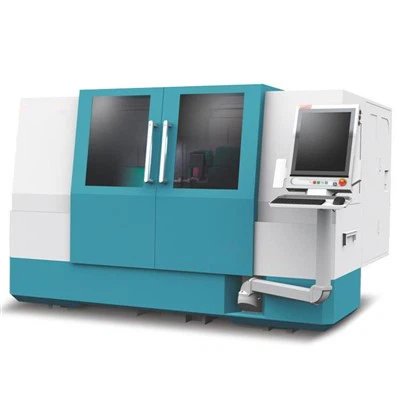
Despite these disadvantages, centerless grinding machines still offer many advantages, such as high – precision grinding, high – volume production, and excellent surface finish. For many applications, the benefits outweigh the drawbacks. However, it is important for potential customers to be aware of these disadvantages when considering purchasing a centerless grinding machine.
Surface Grinding Machine If you are interested in learning more about centerless grinding machines or would like to discuss how these machines can meet your specific production needs, please feel free to contact us. We are always ready to provide you with detailed information and support to help you make an informed decision.
References
- "Grinding Technology: Theory and Applications of Machining with Abrasives" by Stephen Malkin.
- "Manufacturing Engineering and Technology" by Serope Kalpakjian and Steven Schmid.
- Industry reports on centerless grinding machines from leading manufacturing associations.
Henan Rowdai Machinery Equipment Co., Ltd.
As one of the most professional centerless grinding machine manufacturers in China, we’re featured by quality products and good price. Please rest assured to buy high-grade centerless grinding machine for sale here from our factory. If you have any enquiry about cooperation, please feel free to email us.
Address: Building 9, E-Commerce Industrial Park, High-Tech Zone, Zhengzhou, Henan, China
E-mail: rowdai@rowdai.com
WebSite: https://www.rowdai.com/
